Backstory
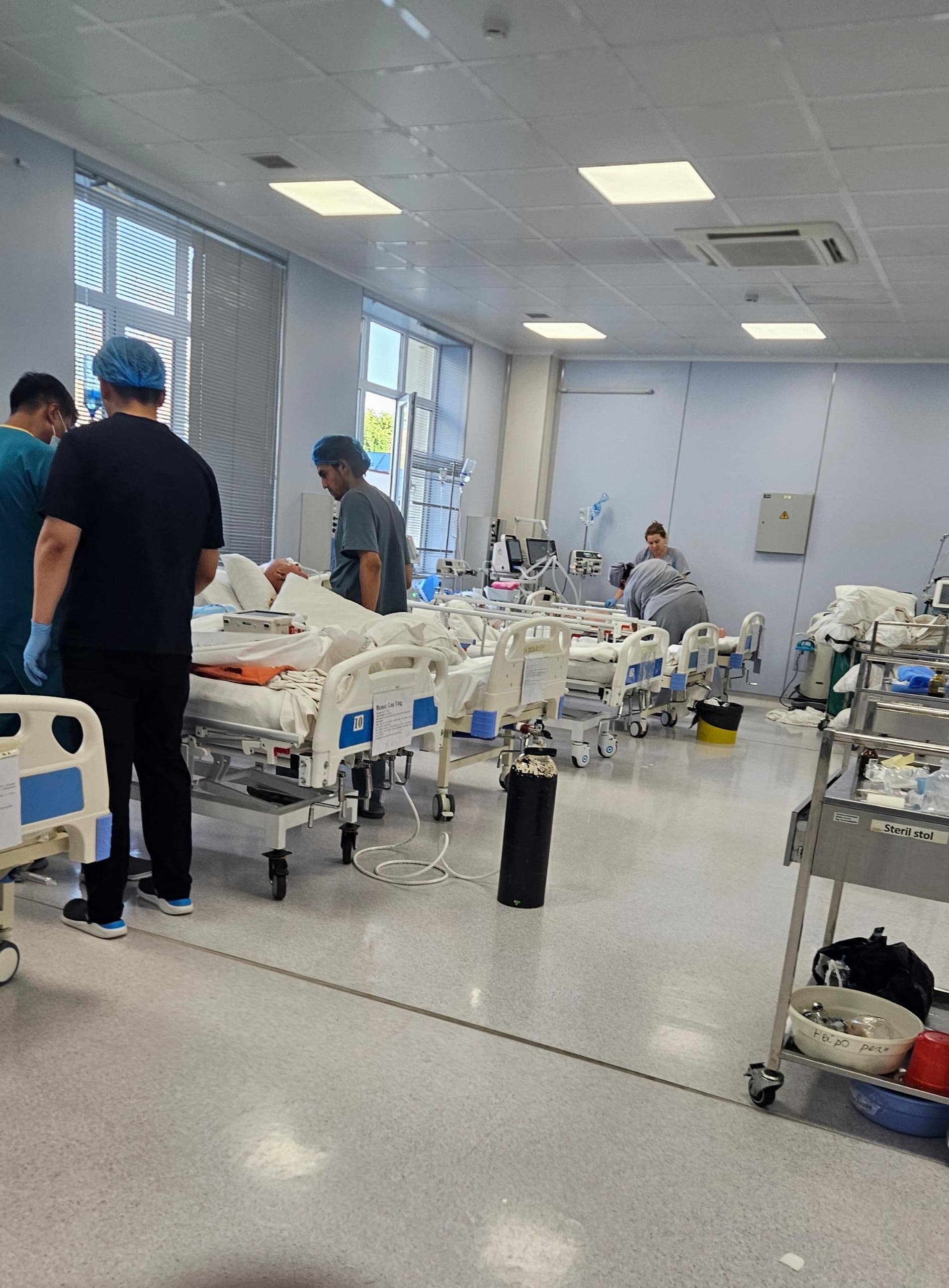
What began as a holiday in Tashkent took an unexpected turn for a 66-year-old woman with a history of poorly controlled hypertension. She was found with a reduced level of consciousness and was taken to a local hospital, where a CT scan confirmed a hemorrhagic stroke. Emergency neurosurgical intervention, including burr hole drainage and external ventricular drain (EVD) insertion, was performed to reduce raised intracranial pressure.
Despite intensive care, her neurological recovery remained limited. She subsequently required a tracheostomy for prolonged ventilation and was treated for cerebral edema. During her admission, she also developed a Staphylococcus aureus respiratory infection, which responded well to intravenous antibiotics. Once her condition had stabilised, arrangements were made for an aeromedical retrieval.
Preparations
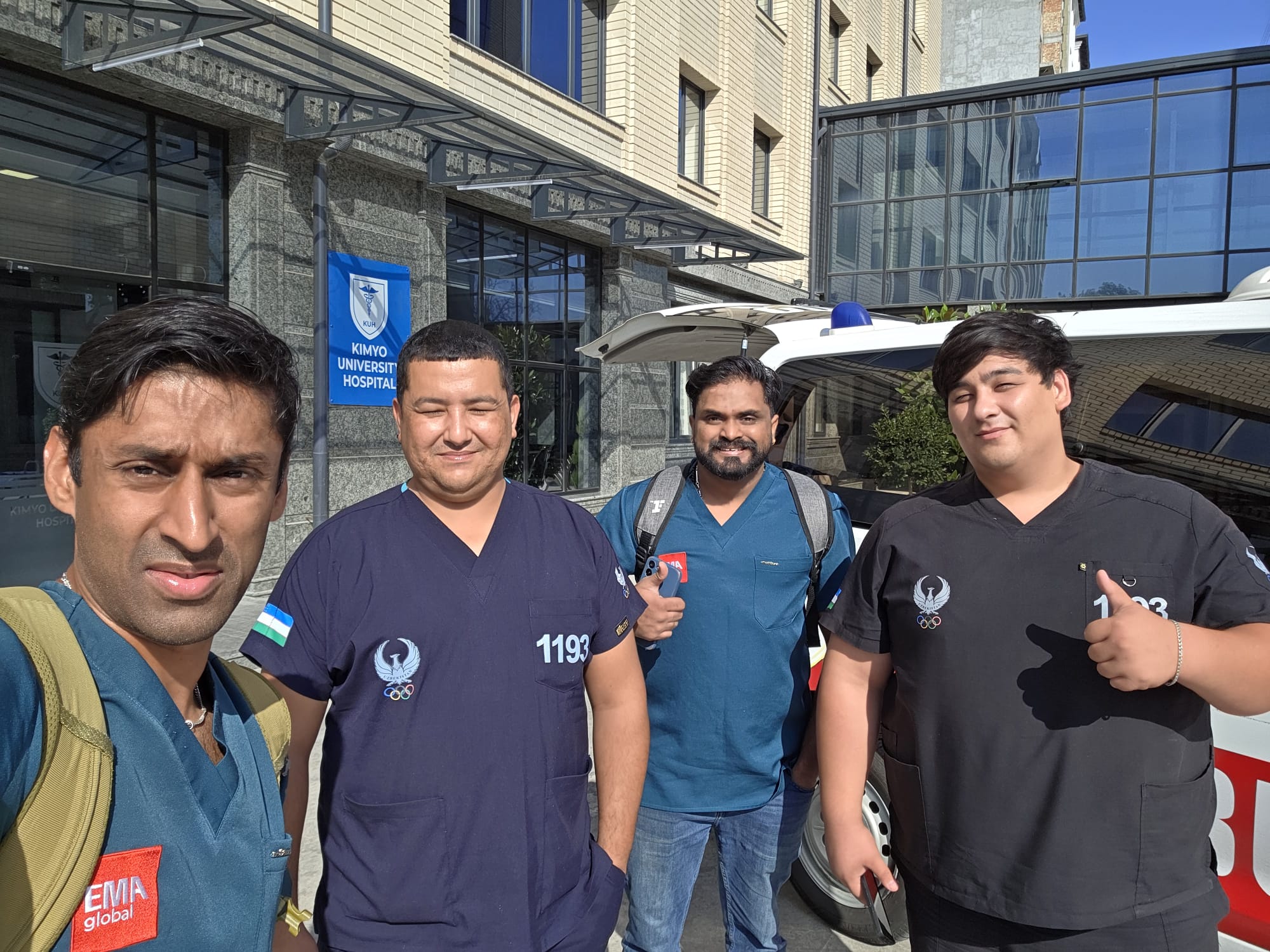
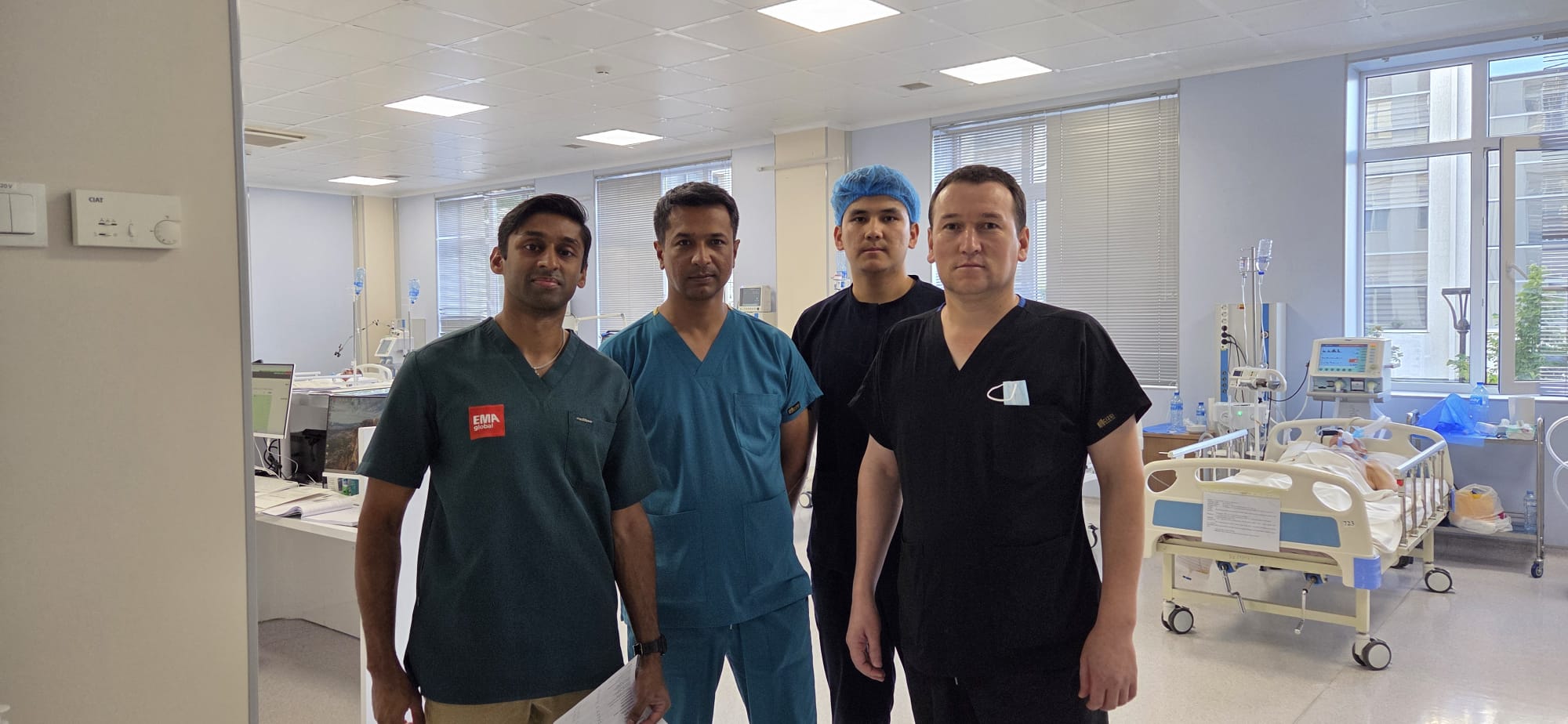
As with every international retrieval, careful preparation was essential. The team reviewed the patient’s clinical history, imaging, laboratory results, ventilator requirements, medications, and neurological status before departure. Equipment and medications required for transport were prepared to ensure continuity of intensive care throughout the journey. Close coordination was also undertaken with the receiving hospital, local medical providers, and aviation crew to facilitate a safe transfer.
Challenges Along the Way
One of the main challenges was the language barrier. Direct communication with the treating medical team was difficult, requiring assistance from a local translator and healthcare provider to obtain accurate clinical information. The patient’s son also played an invaluable role by helping bridge communication gaps and providing additional updates throughout the admission.
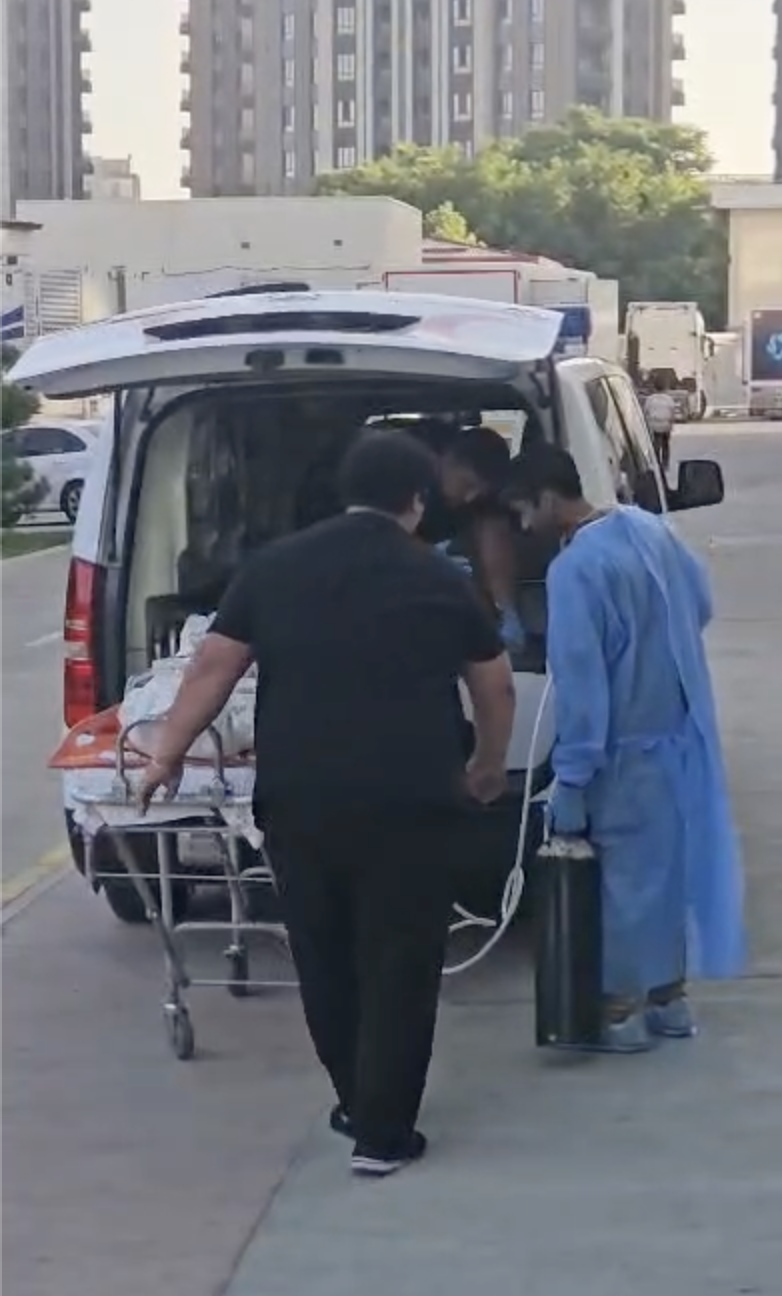
The retrieval itself presented another unexpected hurdle. After the patient had been transferred to the airport, a technical issue with the aircraft delayed departure. To ensure uninterrupted care, the patient was temporarily transferred to another hospital while awaiting clearance for the flight. Once the aircraft was ready, the transfer resumed without further complications, and the patient was safely loaded onboard.
Conclusion
International aeromedical retrievals require far more than transporting a patient from one location to another. They demand meticulous planning, adaptability, and seamless teamwork across different healthcare systems, languages, and cultures. Despite the unexpected challenges encountered during this mission, effective communication, collaboration, and careful clinical planning ensured that the patient received continuous critical care throughout her journey home. Every successful retrieval is a testament to the dedication of everyone involved in making safe patient transport possible, regardless of the obstacles encountered.
Credits:
Write up by Flight Nurse Jag
Photos by Dr Giju & Flight Nurse Jag





 News and Insight
 July 13, 2026