


Travelling Through Typhoon Season In The Asia Pacific
 News and Insight
 September 21, 2026
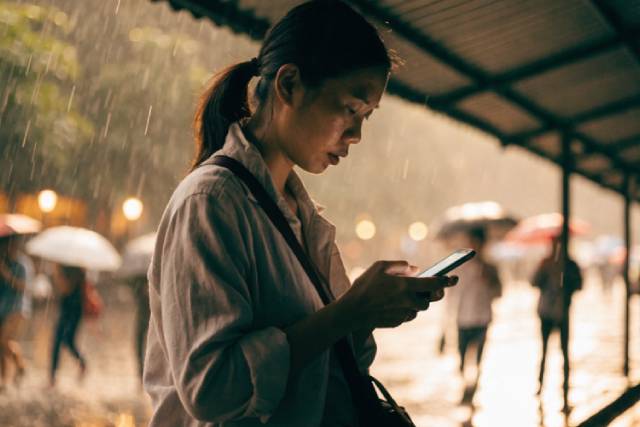
You have been watching the forecast for a week, and the little swirl of cloud out in the Pacific has a name now. Your flight to Manila, Taipei, or Osaka is still showing as scheduled, and you are quietly weighing up whether to repack for rain or rethink the whole trip.
Beyond the haze season, storms are a normal part of travelling around this region at this time of year, and they are seldom a reason to cancel a well-planned journey. A season of shifting weather simply rewards travellers who stay informed and keep a little flexibility in their plans.
When the region sees the most storms
The western North Pacific is the busiest tropical cyclone basin in the world, and its activity is strongly seasonal. Records published by the Hong Kong Observatory’s tropical cyclone statistics show storms concentrated in the warmer half of the year, with the highest frequency across the late-summer and autumn months. September sits squarely inside that busier window.
For a Singapore traveller, the practical point is about destinations more than the departure city. Singapore lies outside the main typhoon track, yet many favourite regional destinations, from the Philippines and Vietnam to Taiwan, Hong Kong, and Japan, sit right inside it during these months.
What a passing storm can disrupt
It helps to know what a serious storm typically affects, so that a warning translates into specific preparations rather than vague worry. Airports close and reopen at short notice, and a single cancelled flight can ripple through connections for days. Ferries and regional flights to islands and coastal towns are often the first to stop and the last to resume.
On the ground, heavy rain can flood roads, halt trains, and cut power to whole districts, which in turn affects card payments, mobile networks, cash machines, and the pumps at petrol stations. None of these is dramatic on its own, yet together they explain why a storm that misses you directly can still reshape a few days of a trip.
Cross-border knock-on effects are common too. A typhoon that strikes one country can delay flights and shipping across the wider region, so even a destination sitting under clear skies may feel the ripple for a day or two while schedules recover.
Reading conditions before and during your trip
Good information turns a worrying forecast into a manageable one. Before you travel, check your destination country’s national weather service and the Ministry of Foreign Affairs travel advisories, which flag significant disruptions and let you register your trip so you can be reached if conditions change while you are away.
It also helps to note, in advance, the name of your destination’s official weather agency and its emergency number, and to keep an eye on local news once you arrive. Forecasts in the region are generally reliable a few days out, which is usually enough warning to bring a beach day forward or push a mountain excursion back. Small adjustments made early tend to beat big decisions made late.
When a delay affects more than your plans
Most storm disruption is logistical: a delayed flight, a night in an unplanned hotel, an itinerary quietly rearranged. Every so often, though, weather and health overlap, and that is where a little forethought pays off.
A traveller managing an ongoing condition may find pharmacies shut and clinics stretched after a major storm, and someone who falls ill during a washed-out week faces the added hurdle of unfamiliar healthcare and patchy transport. This is where medical assistance services, which coordinate medical help for travellers who are far from home, earn their place, arranging advice, local care, hospital admission, and onward transport when getting around has become difficult.
Knowing that such support exists, and carrying the number before you need it, takes a surprising amount of stress out of watching a forecast worsen.
Building flexibility into the plan
The traveller who copes best with a storm is usually the one who left a little slack in the schedule. In practice that can mean a few simple choices.
- Favouring refundable or changeable bookings during peak storm months, so a delay does not become a loss.
- Keeping a day of buffer around any unmissable event or onward flight.
- Downloading offline maps and your accommodation details before you land, in case connectivity drops.
- Packing your regular medication in your hand luggage, enough to cover several extra days if you are delayed.
- Saving your embassy contact and a reliable assistance line somewhere you can reach them quickly.
None of this dampens the trip. It simply means a rescheduled ferry or a shuttered airport becomes an inconvenience you planned for, not a crisis you meet cold.
Staying safe once a storm arrives
If a typhoon does close in while you are away, local authorities become your most reliable source of direction, and following official instructions to stay put or to move is far wiser than clinging to your original itinerary. Flooding, landslides, road closures, and transport shutdowns can persist for days after the winds ease, so patience becomes part of staying safe. Doing your homework early is easier still, and researching and preparing for safety risks abroad before you go leaves you with fewer decisions to make under pressure once the weather turns.
Conclusion
A storm season is not a reason to stay home. It is a reason to travel a little more deliberately, with a plan that bends instead of breaking when the sky changes its mind.
At EMA Global, we support travellers across the region when journeys do not go to plan, coordinating medical and travel assistance wherever you happen to be. Before your next trip into storm season, talk to us about having steady support behind you.

