


Trekking At High Altitude: A Traveller Safety Guide
 Travel Tips & Guide
 September 9, 2026
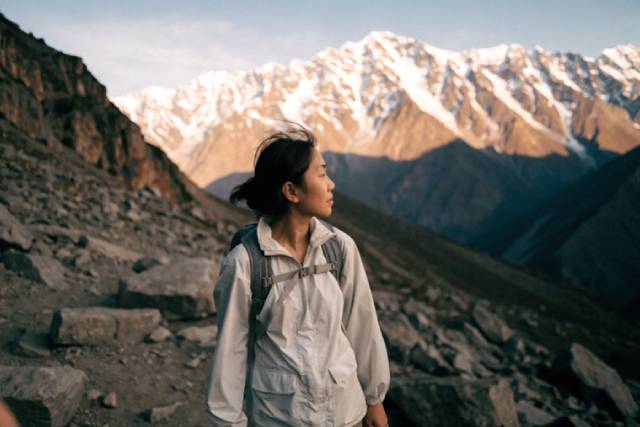
The teahouse door creaks open before dawn, and the trail outside is already glowing pale gold against the peaks. Your boots are laced, your daypack is light, and the air feels thin enough that the first few steps take more effort than they should.
This is the moment many trekkers picture when they book an autumn trip to the mountains. September to November is the classic trekking window across much of the Himalaya, once the monsoon has cleared and the views are at their most generous. A little planning around altitude, done before the excitement takes over, often separates a trip you finish strong from one cut short by a headache that will not shift.
What thin air does to your body
As you climb, the air holds the same proportion of oxygen, but the lower pressure means each breath delivers less of it into your blood. Your body compensates by breathing faster and working harder, and for most people this adjustment settles with time and a sensible pace.
Altitude illness becomes a real consideration higher up. Guidance from the US Centers for Disease Control and Prevention on high-altitude travel notes that acute mountain sickness can affect people sleeping above roughly 2,450 metres, bringing symptoms such as headache, poor sleep, nausea, and tiredness. Well-known routes towards Everest Base Camp climb far beyond that height, which is exactly why proper itineraries build in time to acclimatise.
The concern is what happens when those early signs are brushed aside and a trekker keeps ascending. A worsening case can call for a rapid descent and, in genuinely remote terrain, a medical evacuation, meaning the organised movement of a patient from where they became unwell to a place that can treat them properly.
The value of a gradual ascent
Height gained slowly is height your body can handle. The same health authority suggests that, once above about 3,000 metres, you raise your sleeping altitude by no more than roughly 500 metres a night, with an added rest day for every 1,000 metres or so of climbing. A thoughtful itinerary treats those rest days as part of the route, not lost time.
Building a plan you can adjust
A handful of habits make acclimatisation far more comfortable, and most of them cost nothing but a little discipline on the trail.
- Climb high and sleep low where the route allows, so your body samples the altitude by day and recovers at a lower camp by night.
- Keep well hydrated and go easy on alcohol, which can blur how you are actually feeling.
- Watch your companions as closely as yourself, since people are often the last to notice their own symptoms.
- Leave room in the schedule so an extra night becomes an option the moment someone is struggling.
Flexibility is the quiet advantage here. Turning a plan into a rigid deadline is what pushes tired trekkers to keep climbing when their bodies are asking them to stop.
Sorting the essentials before you leave Singapore
Preparation on the ground shapes how relaxed you feel on the trail. A visit to a travel health clinic several weeks ahead leaves time for any recommended vaccinations and an honest conversation about your planned route and any conditions you manage.
The Ministry of Foreign Affairs travel advice for Singaporeans is a sensible stop as well, both for country information and for registering your trip so you can be reached if something happens at home or on the trail.
It also helps to be realistic about how remote your chosen route really is. A popular path with lodges every few hours is a different undertaking from an expedition several days from the nearest road. The further out you go, the more your planning should account for how help would physically reach you, and how long that might take.
Listening to what your body tells you
The most useful skill on a high trail is honesty about how you feel. Early altitude illness is easy to dismiss as ordinary tiredness or a poor night’s sleep, which is precisely why it catches experienced walkers as often as first-timers.
A headache that painkillers do not settle, unusual breathlessness at rest, or a loss of appetite and balance are the kind of signals that deserve attention rather than a brave face. Health authorities are consistent that a person with such symptoms should not climb higher to sleep, and should descend if they worsen. Agreeing that principle with your guide before you set off takes the pressure off making the call in the moment, high on a slope, when you are tired and the summit feels close.
When a trek goes beyond a first-aid kit
Most trekking mishaps are minor. Blisters, an unsettled stomach, or a turned ankle that eases with a rest day account for the vast majority, and a compact kit paired with a steady pace handles them well.
The rarer moments are the ones to understand in advance. A stubborn chest infection at altitude, a serious fall on a scree slope, or a heart problem far from any clinic can each turn a holiday into a situation that needs organised help.
Understanding the conditions that warrant an air ambulance gives you a clearer sense of when things have moved beyond what a guide and a first-aid kit can manage, and why keeping an assistance number to hand belongs on the things you should check before a high-altitude hike. Reaching a road, let alone a hospital, can take many hours from a high trail, so the value of knowing who to call sits in the planning, long before you would ever need it.
Conclusion
The mountains reward people who arrive prepared and rested, and that preparation is what lets you spend your energy on the views instead of on worry. Pace the climb, listen to your body, and know who to call if a small problem starts to grow.
At EMA Global, we help travellers and their families plan for the unexpected long before they set off, coordinating assistance and transport when a trip takes an unexpected turn. Whenever your next adventure leads you far from home, our team is ready to help you find your way back to care.

